
Can GLP-1 Cause Hair Loss?
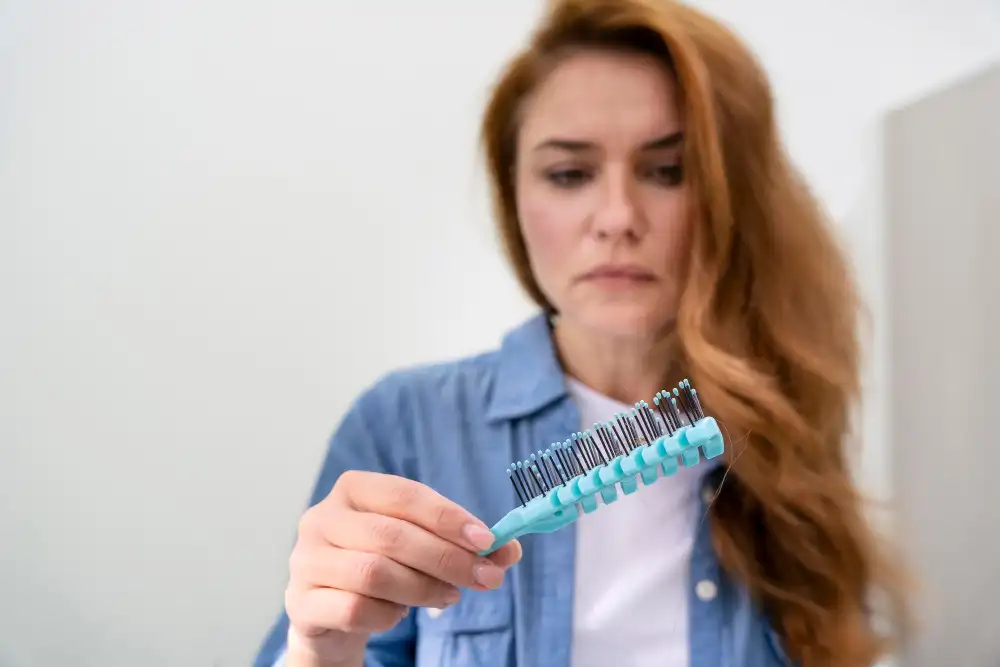
Many patients notice increased hair shedding during significant weight loss and wonder whether GLP-1 medications are the cause. In most cases, the medication itself is not directly responsible.
Hair loss during GLP-1 therapy is more commonly related to:
- Rapid weight loss
- Nutritional deficiencies
- Inadequate protein intake
- Physical stress on the body
- Hormonal changes
Why Hair Loss Happens During Weight Loss
Hair follicles are highly sensitive to metabolic and nutritional stress. When the body experiences a rapid reduction in calories, it may shift more hair follicles into a resting phase, leading to a condition called telogen effluvium.
Telogen effluvium is a temporary form of hair shedding that often occurs several weeks or months after significant weight loss, illness, surgery, or major physical stress.
The good news is that this type of hair loss is usually manageable and often reversible when the underlying causes are addressed.
How Asōka MedSpa Helps Protect Hair Health
At Asōka MedSpa, we take a comprehensive approach to evaluating and treating hair loss during weight-loss therapy.
PRP Scalp Therapy
Platelet-Rich Plasma (PRP) Therapy uses your body’s own growth factors to stimulate hair follicles and improve scalp circulation.
Benefits may include:
- Thicker-looking hair
- Reduced shedding
- Improved hair density
- Enhanced follicle health
Photoelectric Hair Follicle Stimulation
This advanced light-based therapy helps support healthier hair growth by:
- Increasing blood flow to the scalp
- Stimulating dormant hair follicles
- Enhancing follicular energy production
- Supporting the hair growth cycle
Nutritional & Hormonal Evaluation
Because hair health depends on more than just the scalp, we also evaluate potential underlying contributors, including:
- Iron levels
- Vitamin D
- Vitamin B12
- Protein intake
- Thyroid function
- Hormonal balance
Correcting these deficiencies can play a major role in reducing shedding and supporting healthy regrowth.
Why Early Intervention Matters
The earlier hair shedding is addressed, the better the chances of preserving follicle health and encouraging stronger regrowth.
Our team monitors your progress throughout your weight-loss journey and adjusts your treatment plan as needed to support both healthy fat loss and healthy hair growth.
Final Thoughts
Hair shedding during rapid weight loss is relatively common, but it doesn’t have to be permanent.
With proper nutritional support, medical evaluation, and targeted treatments such as PRP Scalp Therapy and Photoelectric Hair Follicle Stimulation, most patients can protect their follicles and improve their long-term hair growth outcomes.
At Asōka MedSpa, we focus on helping you achieve weight-loss results without compromising your overall health, appearance, or confidence.
Healthy weight loss should support your body—not stress it.